
Primary Antibody Matched Pairs

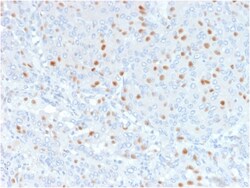
Biotium Annexin A1 / (Hairy Cell Leukemia Marker)(6E4/3), CF568 conjugate, 0.1mg/mL
Annexin A1 belongs to the annexin family. It plays a role in glucocorticoid-mediated down-regulation of the early phase of the inflammatory response. In resting conditions Annexin A1 is localized to the cytoplasm. Upon activation it is mobilized to the membrane and secreted. Annexin A1 and contains 4 annexin repeats. A pair of annexin repeats may form one binding site for calcium and a phospholipid. Expression of the ANXA1 gene is upregulated in hairy cell leukemia (HCL). Detection of ANXA1 provides a simple, highly sensitive and specific assay for diagnosing HCL. Annexin A1 has also been found to be protective against DNA damage induced by heat in breast cancer cells, suggesting it is involved in tumor suppressive and protective activities, and also is associated with treatment resistance. Primary antibodies are available purified, or with a selection of fluorescent CF Dyes and other labels. CF Dyes offer exceptional brightness and photostability. Note: Conjugates of blue fluo

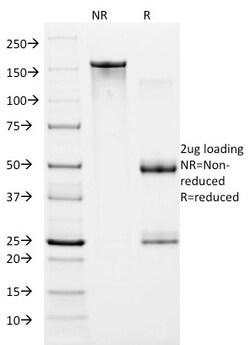
Biotium HIF1 alpha (Hypoxia-Inducible Factor 1-alpha)(ESEE122), CF488A conjugate, 0.1mg/mL
HIF1 (hypoxia-inducible factor 1), a heterodimeric transcription factor complex central to cellular response to hypoxia, consists of two subunits (HIF-1 alpha and HIF-1 beta) which are basic helix-loop-helix proteins of the PAS (Per, ARNT, Sim) family. Expression of HIF-1 alpha protein is regulated by cellular oxygen level alterations as well as in oxygen-independent manner via different cytokines (through the PI3K-AKT-mTOR pathway), growth factors, oncogenic activation, or loss of tumor suppressor function etc. In normoxic cells, HIF-1 alpha is proline hydroxylated leading to a conformational change that promotes its binding to the VLH (von Hippel Lindau) protein E3 ligase complex; ubiquitination and followed by rapid proteasomal degradation. Hypoxia as well as chemical hydroxylase inhibitors (desferrioxamine, cobalt etc. ) inhibit HIF-1 alpha degradation and lead to its accumulation in the cells, whereas, contrastingly, HIF-1 beta/ARNT (AhR nuclear translocator) remains sta

Biotium CD56 / NCAM1 / NKH1 (Neuronal Cell Marker) (NCAM1/1496), 1mg/mL
This MAb reacts with an extracellular domain (close to transmembrane) of CD56/NCAM. Three isoforms of neural cell adhesion molecule (NCAM) are produced by differential splicing of the RNA transcript from a single gene. The 135 kDa isoform is the basic molecule, which is glycosylated or sialylated to produce the mature species. Anti-CD56 recognizes two proteins of the neural cell adhesion molecule, the basic molecule expressed on most neuroectodermally derived tissues and neoplasms (e.g. retinoblastoma, medulloblastomas, astrocytomas, neuroblastomas, and small cell carcinomas). It is also expressed on some mesodermally derived tumors (rhabdomyosarcoma). Anti-CD56 plays an important role in the diagnosis of nodal and nasal NK/T-cell lymphomas.Primary antibodies are available purified, or with a selection of fluorescent CF Dyes and other labels. CF Dyes offer exceptional brightness and photostability. Note: Conjugates of blue fluorescent dyes like CF405S and CF405M are not

Biotium CD56 / NCAM1 / NKH1 (Neuronal Cell Marker) (NCAM1/1496), CF568 conjugate, 0.1mg/mL
This MAb reacts with an extracellular domain (close to transmembrane) of CD56/NCAM. Three isoforms of neural cell adhesion molecule (NCAM) are produced by differential splicing of the RNA transcript from a single gene. The 135 kDa isoform is the basic molecule, which is glycosylated or sialylated to produce the mature species. Anti-CD56 recognizes two proteins of the neural cell adhesion molecule, the basic molecule expressed on most neuroectodermally derived tissues and neoplasms (e.g. retinoblastoma, medulloblastomas, astrocytomas, neuroblastomas, and small cell carcinomas). It is also expressed on some mesodermally derived tumors (rhabdomyosarcoma). Anti-CD56 plays an important role in the diagnosis of nodal and nasal NK/T-cell lymphomas.Primary antibodies are available purified, or with a selection of fluorescent CF Dyes and other labels. CF Dyes offer exceptional brightness and photostability. Note: Conjugates of blue fluorescent dyes like CF405S and CF405M are not

Biotium UGT1A9 (UDP glucuronosyltransferase 1 family, polypeptide A9)(UGT1A9/1229), CF405S conjugate, 0.1mg/mL
This antibody recognizes a protein of about 60 kDa, which is identified as human UGT1A9. It does not cross-react with the other UGT1A isoforms including UGT1A7, UGT1A8, and UGT1A10 and shows a high degree of specificity. UGT1A9 is a UDP-glucuronosyltransferase, an enzyme of the glucuronidation pathway that transforms small lipophilic molecules, such as steroids, bilirubin, hormones, and drugs, into water-soluble, excretable metabolites. This MAb binds to human hepatocytes and the majority of human hepatocellular carcinomas (HCC s). In frozen sections, it stains hepatic cells and may be used as a marker of the liver. This MAb also binds to cell preparations of hepatocellular carcinoma biopsies or cell lines.Primary antibodies are available purified, or with a selection of fluorescent CF Dyes and other labels. CF Dyes offer exceptional brightness and photostability. Note: Conjugates of blue fluorescent dyes like CF405S and CF405M are not recommended for detecting low abund

Human AFP ELISA Pair Set 15PP (Sino Biological)
Each vial contains 100 ng of recombinant Human AFP / alpha-fetoprotein. Reconstitute with 1 mL Dilution Buffer. After reconstitution, store at -20℃ to -80℃ in a manual defrost freezer. A seven-point standard curve using 2-fold serial dilutions in Dilution Buffer, and a high standard of 1000 pg/mL is recommended.
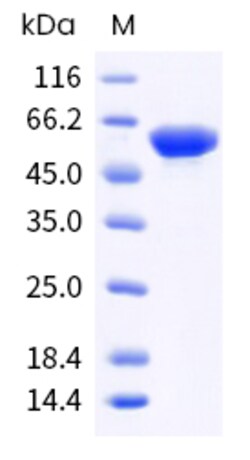
Human CES1 Protein 50ug (Sino Biological)
A DNA sequence encoding the Human CES1 (NP_001020365) (Met1-Leu567) was expressed with a polyhistidine tag at the C-terminus.
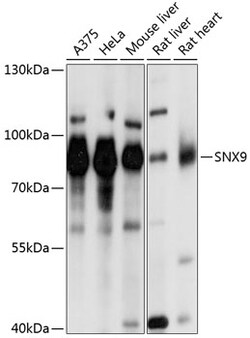
ABclonal Technology SNX9 Rabbit pAb

This gene encodes a member of the sorting nexin family. Members of this family contain a phosphoinositide binding domain, and are involved in intracellular trafficking. The encoded protein does not contain a coiled coil region, like some family members, but does contain a SRC homology domain near its N-terminus. The encoded protein is reported to have a variety of interaction partners, including of adaptor protein 2 , dynamin, tyrosine kinase non-receptor 2, Wiskott-Aldrich syndrome-like, and ARP3 actin-related protein 3. The encoded protein is implicated in several stages of intracellular trafficking, including endocytosis, macropinocytosis, and F-actin nucleation.

Bioss CD55 - Extracellular region An
CD55 (Extracellular region) Primary Antibody Unconjugated Host Species Mouse Target Species Human Clonality Monoclonal Applications WB IP M033Concentration Size 100 ul Storage Buffer PBS 1 mg/ml BSA 0 05% NaN3 and 50% glycerol
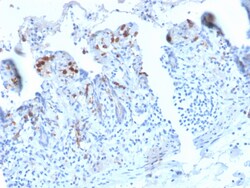
Biotium CD209 / DC-SIGN (Pathogen Receptor on Dendritic Cells)(C209/2749R), CF740 conjugate, 0.1mg/mL
DC-SIGN is a transmembrane receptor that is expressed on the surface of dendritic cells and macrophages. It is involved in the innate immune system and recognizes numerous evolutionarily divergent pathogens ranging from parasites to viruses. The protein is organized into three distinct domains: an N-terminal transmembrane domain, a tandem-repeat neck domain and C-type lectin carbohydrate recognition domain. The extracellular region consisting of the C-type lectin and neck domains has a dual function as a pathogen recognition receptor and a cell adhesion receptor by binding carbohydrate ligands on the surface of microbes and endogenous cells. The neck region is important for homo-oligomerization, which allows the receptor to bind multivalent ligands with high avidity. Primary antibodies are available purified, or with a selection of fluorescent CF Dyes and other labels. CF Dyes offer exceptional brightness and photostability. Note: Conjugates of blue fluorescent dyes like C
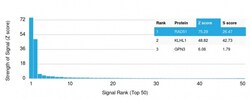
Biotium RAD51 (Prognostic and Response to Chemotherapy Marker)(RAD51/2701), CF488A conjugate, 0.1mg/mL
RAD51 is one of the key factors of DNA repair by homologous recombination and has been shown to have anti-apoptotic activity in tumor cells. RAD51 protein interacts with a variety of tumor suppressor proteins including p53, BRCA1 and BRCA2. Elevated expression of RAD51 enhances radio-resistance of human tumor cells. Overexpression of RAD51 protein in tumor cells renders them resistant against cytotoxic drugs like Cisplatin. RAD51 interacts with BRCA1 and BRCA2 to influence subcellular localization and cellular response to DNA damage. BRCA2 inactivation may be a key event leading to genomic instability and tumorigenesis from deregulation of RAD51. High-level expression of RAD51 has been observed in a variety of human malignancies. RAD51 overexpression correlates with histological grading of the tumor in invasive ductal mammary carcinoma. Primary antibodies are available purified, or with a selection of fluorescent CF Dyes and other labels. CF Dyes offer exceptional brightnes
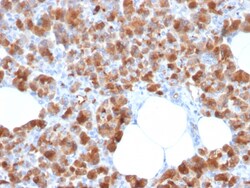
Biotium Carboxypeptidase A1 / CPA1 (Pancreatic Cancer Marker)(CPA1/2713), CF405S conjugate, 0.1mg/mL
Carboxypeptidase A1 (CPA1) is a secreted zinc metalloprotease that is highly expressed in pancreatic tissue. It catalyzes the release of C-terminal amino acids from a variety of proteins, thereby playing a key role in protein digestion and degradation. Human pancreatic procarboxypeptidase A exists as three different active forms, two of which are carboxypeptidase A1 (CPA1) and carboxypeptidase A2 (CPA2). Abnormal levels of CPA1 are associated with pancreatic cancer, suggesting a possible role in either tumor progression or tumor suppression events. Primary antibodies are available purified, or with a selection of fluorescent CF Dyes and other labels. CF Dyes offer exceptional brightness and photostability. Note: Conjugates of blue fluorescent dyes like CF405S and CF405M are not recommended for detecting low abundance targets, because blue dyes have lower fluorescence and can give higher non-specific background than other dye colors.
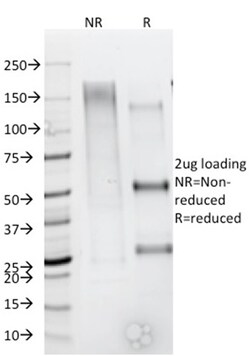
Biotium CD79b (B-Cell Marker) (IGB/1844), CF488A conjugate, 0.1mg/mL
CD79 (also designated Ig α/Igβ) is a heterodimer composed of α chains, designated CD79A or MB-1, andβ chains, designated CD79B or B29. The B cell antigen receptor complex (BCR) is formed by the association of CD79 with a membrane immunoglobulin, such as IgM or IgD. The membrane immunoglobulins IgM and IgD achieve surface expression and antigen presentation function in response to CD79 association. The cytoplasmic tails of both CD79A and CD79B contain an ITAM (immuno-receptor tyrosine-based activation) motif, which acts to initiate the BCR signaling reactions by binding to and activating tyrosine kinases.Primary antibodies are available purified, or with a selection of fluorescent CF Dyes and other labels. CF Dyes offer exceptional brightness and photostability. Note: Conjugates of blue fluorescent dyes like CF405S and CF405M are not recommended for detecting low abundance targets, because blue dyes have lower fluorescence and can give higher non-spe
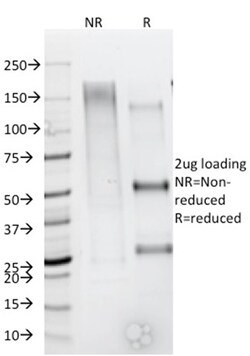
Biotium CD79b (B-Cell Marker) (IGB/1844), 0.2mg/mL
CD79 (also designated Ig α/Igβ) is a heterodimer composed of α chains, designated CD79A or MB-1, andβ chains, designated CD79B or B29. The B cell antigen receptor complex (BCR) is formed by the association of CD79 with a membrane immunoglobulin, such as IgM or IgD. The membrane immunoglobulins IgM and IgD achieve surface expression and antigen presentation function in response to CD79 association. The cytoplasmic tails of both CD79A and CD79B contain an ITAM (immuno-receptor tyrosine-based activation) motif, which acts to initiate the BCR signaling reactions by binding to and activating tyrosine kinases.Primary antibodies are available purified, or with a selection of fluorescent CF Dyes and other labels. CF Dyes offer exceptional brightness and photostability. Note: Conjugates of blue fluorescent dyes like CF405S and CF405M are not recommended for detecting low abundance targets, because blue dyes have lower fluorescence and can give higher non-spe
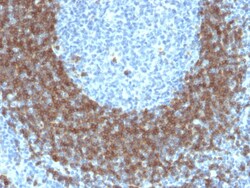
Biotium CD79b (B-Cell Marker)(IGB/1842), CF647 conjugate, 0.1mg/mL
CD79 (also designated Ig chains, designated CD79B or B29. The B cell antigen receptor complex (BCR) is formed by the association of CD79 with a membrane immunoglobulin, such as IgM or IgD. The membrane immunoglobulins IgM and IgD achieve surface expression and antigen presentation function in response to CD79 association. The cytoplasmic tails of both CD79A and CD79B contain an ITAM (immuno-receptor tyrosine-based activation) motif, which acts to initiate the BCR signaling reactions by binding to and activating tyrosine kinases. Primary antibodies are available purified, or with a selection of fluorescent CF Dyes and other labels. CF Dyes offer exceptional brightness and photostability. Note: Conjugates of blue fluorescent dyes like CF405S and CF405M are not recommended for detecting low abundance targets, because blue dyes have lower fluorescence and can give higher non-specific background than other dye colors.